




Gaming GPUs Meet AI: High-Performance Computing Revolution

Graphics Processing Units (GPUs) have evolved from niche graphics add-ons into the driving force behind today’s most demanding computing tasks. Originally built to render video game visuals, modern GPUs now accelerate everything from cutting-edge gaming experiences to artificial intelligence (AI) research and high-performance computing (HPC) in data centers. This convergence of gaming graphics and AI hardware is reshaping what’s possible for both enthusiasts and professionals. In this article, we explore how GPU technology’s rapid advancement – a specialty of ElvonTech – is fueling a revolution in performance computing and what it means for gamers and industry alike.
From Graphics to AI: The Evolution of GPUs
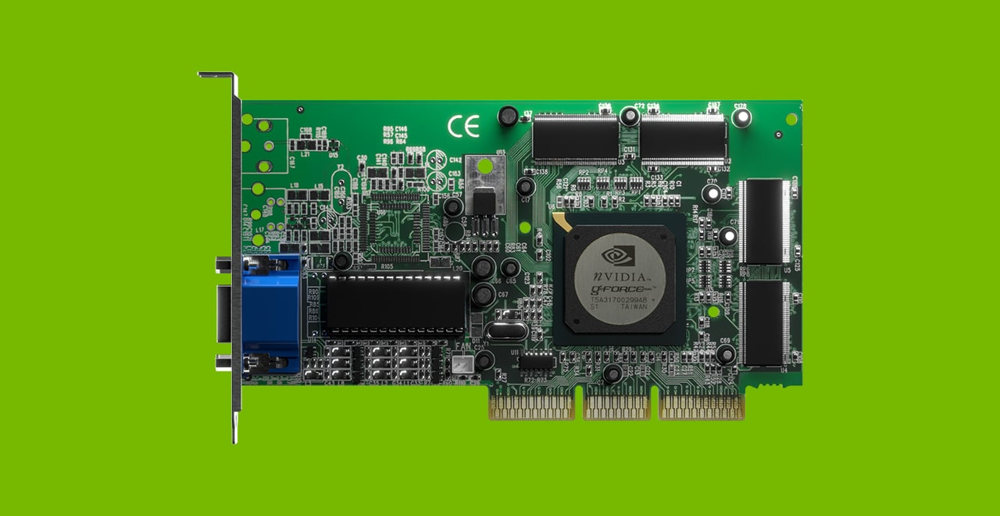
NVIDIA GeForce 256 (1999), the world's first GPU, set the stage for future advancements in gaming and computing.
GPUs were initially designed to handle computer graphics – making video games look realistic and smooth. Unlike a CPU (central processor) that executes tasks one at a time, a GPU contains thousands of smaller cores that work in parallel, allowing it to perform many calculations simultaneously. This parallel architecture was a game-changer for rendering 3D graphics and visual effects, dramatically improving frame rates and visual fidelity in games. Over the past two decades, close collaboration between GPU makers and game developers has led to innovations like realistic lighting, textures, and physics in games
As GPUs pushed gaming to new heights, researchers realized the same parallel processing power could accelerate computational tasks far beyond graphics. Around 2010, AI labs began repurposing gaming GPUs to train neural networks, since training AI models involves performing billions of math operations – a perfect fit for GPUs’ massively parallel design. A landmark moment came in 2012 when an academic team used GPU hardware to train the “AlexNet” deep learning model, achieving a leap in image recognition performance that previously required supercomputers. This pivotal success demonstrated that GPUs could unlock unprecedented speedups in machine learning, ushering in the modern AI boom. By the mid-2010s, GPUs had become indispensable for AI: researchers at Google, Microsoft, OpenAI and others relied on GPU clusters to train advanced models in computer vision, language processing, and more. In short, the GPU graduated from a graphics card to an AI workhorse, bridging the once-separate worlds of gaming and high-performance computing.
Gaming GPUs: Pushing Consumer Performance Boundaries
Today’s gaming GPUs are not just for play – they’re technological powerhouses that embody the latest advances in silicon engineering. Modern graphics cards like NVIDIA’s GeForce RTX and AMD’s Radeon RX series deliver incredible computational performance to drive 4K resolutions, high refresh rates, and ultra-realistic visuals. These cards introduce specialized cores that blur the line between gaming and AI: for instance, NVIDIA’s RTX GPUs feature RT Cores for real-time ray tracing (ultra-realistic lighting and reflections in games) and Tensor Cores for AI-accelerated tasks. The Tensor Cores in a gaming GPU can be used for AI-based features like DLSS (Deep Learning Super Sampling), which uses neural networks to upscale game graphics in real-time, boosting frame rates with minimal quality loss. This is a prime example of crossover technology – the same hardware that powers AI algorithms is making games run better and look sharper.
Another area where gaming and AI needs converge is memory and bandwidth. Cutting-edge games now stream huge textures and simulate complex worlds, while new AI-driven features (like in-game intelligent NPCs or AI-enhanced graphics) run in the background. This has driven demand for higher GPU memory capacity and speed. The latest GPU memory technologies (e.g. GDDR6X, GDDR7) offer massive bandwidth to keep up with both cinematic-quality graphics and real-time AI computations. As Micron’s engineers note, modern PCs are increasingly hybrid “visual computing” systems – they must render rich 3D scenes and simultaneously run AI models for tasks like upscaling, physics, or character AI. By expanding on-board memory and integrating AI capabilities, gaming GPUs now ensure smoother gameplay without stutters, even as game engines incorporate machine learning for things like procedural content generation and realistic physics.
For gamers, this means the line between professional AI tech and consumer graphics is thinner than ever. A high-end gaming PC today contains hardware very similar to an AI research workstation. In fact, many enthusiasts use top-tier gaming GPUs (like an NVIDIA RTX 4090) not only for playing the latest games but also for experimenting with AI models or editing 4K videos. This dual-use capability adds value for prosumers and demonstrates the trickle-down effect of GPU innovation. As GPU architectures advance, the benefits flow to both realms: gamers enjoy more immersive experiences, while creatives and researchers get accessible compute power. The result is a virtuous cycle driving demand for ever more powerful GPUs – a trend that ElvonTech closely follows to provide our customers with state-of-the-art graphics and AI hardware.
GPUs in AI and HPC: Powering the Data Revolution
Beyond the consumer space, GPUs have become the backbone of AI infrastructure in the enterprise and research worlds. Standard CPU-based servers struggle to handle the scale of modern AI and data analytics – tasks like training a deep learning model or running large-scale simulations can take orders of magnitude longer on CPUs. GPUs, by contrast, excel at the linear algebra and parallel number-crunching at the heart of these workloads. It’s no surprise that GPUs now accelerate a majority of high-performance computing projects. In fact, GPU-accelerated systems power 88 of the world’s top 100 supercomputers (up from just 30% in 2019), highlighting how indispensable they’ve become for achieving extreme performance.
The impact of GPUs on HPC and AI is evident across industries. In healthcare, GPUs process massive medical imaging datasets and genomic sequences in a fraction of the time, aiding in faster diagnoses and drug discoveries. In finance, banks leverage GPU-powered servers for real-time risk modeling and algorithmic trading, where split-second computations make a difference. Scientific research has been transformed as well – climate modelers, astrophysicists, and biologists all use GPU-driven HPC clusters to run simulations that were previously infeasible. A single server equipped with multiple AI GPUs (such as NVIDIA’s A100 or H100 data center GPUs) can replace dozens of traditional CPU-only servers in throughput. Benchmarks consistently show that GPUs deliver an order-of-magnitude speedup for deep learning tasks, often 10–20× faster training times compared to CPUs. This acceleration not only slashes experiment time from days to hours, it also enables tackling much larger models and datasets than before – effectively unlocking new AI capabilities that weren’t practical without GPU power.
Crucially, GPUs provide both high throughput and efficiency for AI. They offer exceptional floating-point performance alongside specialized hardware (like Tensor Cores) for AI calculations, all while being far more energy-efficient than an equivalent CPU farm. This efficiency is why the shift to GPUs in supercomputing was “inevitable long before AI became the headline story,” as power constraints of purely CPU systems made exascale computing impractical. By delivering far more operations per watt, GPUs have driven the rise of “accelerated computing” – a new standard in HPC where heterogeneous systems use GPUs as compute accelerators alongside CPUs. Today, virtually all state-of-the-art AI training happens on GPU clusters, whether in on-premises data centers or in the cloud. Tech giants and startups alike turn to GPU-based servers for tasks like training large language models, powering recommendation engines, or performing big data analytics. GPUs have truly revolutionized high-performance computing, enabling breakthroughs in AI and scientific computing at a pace that was unimaginable just a decade ago. For organizations looking to stay at the forefront of innovation, adopting GPU-accelerated systems – such as those provided by ElvonTech’s global GPU server solutions – is now a strategic imperative.
Hybrid GPU Solutions: The Next Frontier
As GPU technology and deployments evolve, new hybrid approaches are emerging to further boost performance and flexibility. One trend is the development of “superchips” that tightly integrate CPU and GPU capabilities in a single package. Traditional servers connect CPUs and GPUs over a PCIe bus, which can be a bottleneck when shuttling data between system memory and GPU memory. Cutting-edge designs like NVIDIA’s Grace Hopper (which pairs a CPU with an H100 GPU) and AMD’s upcoming MI300 series (combining EPYC CPU cores with CDNA GPU cores) solve this by sharing a unified memory address space. In these hybrid architectures, the GPU can directly access CPU memory over high-speed links (like NVLink-C2C in Grace Hopper), eliminating the need for slow data copies over PCIe. This means vastly larger datasets – potentially terabyte-scale models or gigantic recommender system tables – can be kept in memory and worked on by the GPU as if it were local, enabling training of massive AI models on a single node. By unifying the strengths of CPUs (flexible control and access to large memory) with GPUs (extreme parallel compute on high-bandwidth memory), such hybrid chips promise unprecedented performance for complex workflows. They are particularly useful in AI domains like natural language processing and graph analytics, where memory limits have been a major hurdle. ElvonTech keeps a close eye on these innovations, as they herald the next generation of GPU-accelerated hardware that we can offer to clients needing bleeding-edge solutions.
Another aspect of “hybrid setups” is how organizations deploy GPU resources across on-premises and cloud environments. Many enterprises are adopting hybrid GPU clusters, which mix local GPU servers with cloud-based GPU instances to balance scalability, cost, and compliance. In a hybrid deployment, a company might maintain a core private cluster of GPU servers (to handle steady, sensitive workloads and keep data onsite), while bursting into cloud GPU services when extra capacity is needed or for spiky workloads. This approach offers the best of both worlds: local control and data security alongside virtually infinite on-demand scalability in the cloud. For example, firms in healthcare or finance often use on-prem GPU infrastructure for data privacy and consistent performance, but can tap cloud GPU fleets for heavy AI training jobs that exceed their local capacity. Hybrid setups also help optimize costs – critical workloads run on dedicated hardware, while less frequent jobs leverage pay-as-you-go cloud instances. The key is a unified workflow that can distribute tasks between environments seamlessly. Advances in orchestration (like Kubernetes with GPU support) and high-speed networking make it possible to treat on-prem and cloud GPUs as one elastic pool. ElvonTech specializes in such hybrid solutions, designing systems that allow our clients to scale up AI and HPC workloads efficiently while meeting regulatory and business requirements. Whether it’s deploying turnkey GPU servers in your data center or creating a hybrid cloud architecture, the goal is the same: maximize the performance and availability of GPU compute, wherever it resides.
From rendering breathtaking game worlds to training the most advanced AI models, GPUs have become the engine of modern innovation. The once-distinct realms of consumer graphics and professional computing are converging, powered by relentless GPU advancements in processing power, memory, and efficiency. This high-performance tech revolution lies at the heart of ElvonTech’s mission. We believe that whether you’re a gamer chasing ultra-high frame rates or a business training AI to solve complex problems, the right GPU hardware can unlock new possibilities. As GPU technology continues to evolve – with more powerful cards, smarter hybrid systems, and broader accessibility via cloud – it’s clear that the GPU’s journey is just beginning. ElvonTech is committed to staying at the forefront of this journey, providing the expertise and cutting-edge GPU solutions our global customers need to thrive. In a world where performance is king, and AI and graphics drive progress, embracing GPUs is not just an option but a necessity. The future of computing is being shaped by these mighty processors, and we’re excited to help our community harness the full potential of the GPU revolution in the years ahead.